Abstract:
**Summary:**
Facing persistent budget constraints, schools and universities are constantly seeking affordable equipment solutions to support STEM education and enhance learning environments. This article highlights the growing popularity of “value-packed equipment sets” as a smart alternative to purchasing individual items. These curated collections, encompassing everything from science lab essentials to classroom technology bundles, offer significant cost savings, streamlined procurement, and guaranteed compatibility. The piece details the budgetary pressures impacting education, explores various set types (including basic science, advanced chemistry, and robotics kits), and outlines the benefits of choosing these sets – including time savings and standardized equipment. Real-world case studies demonstrate successful implementations in rural schools, community colleges, and university engineering departments. Ultimately, investing in value-packed sets represents a strategic investment in the future of education, enabling institutions to maximize resources and deliver high-quality learning experiences.
---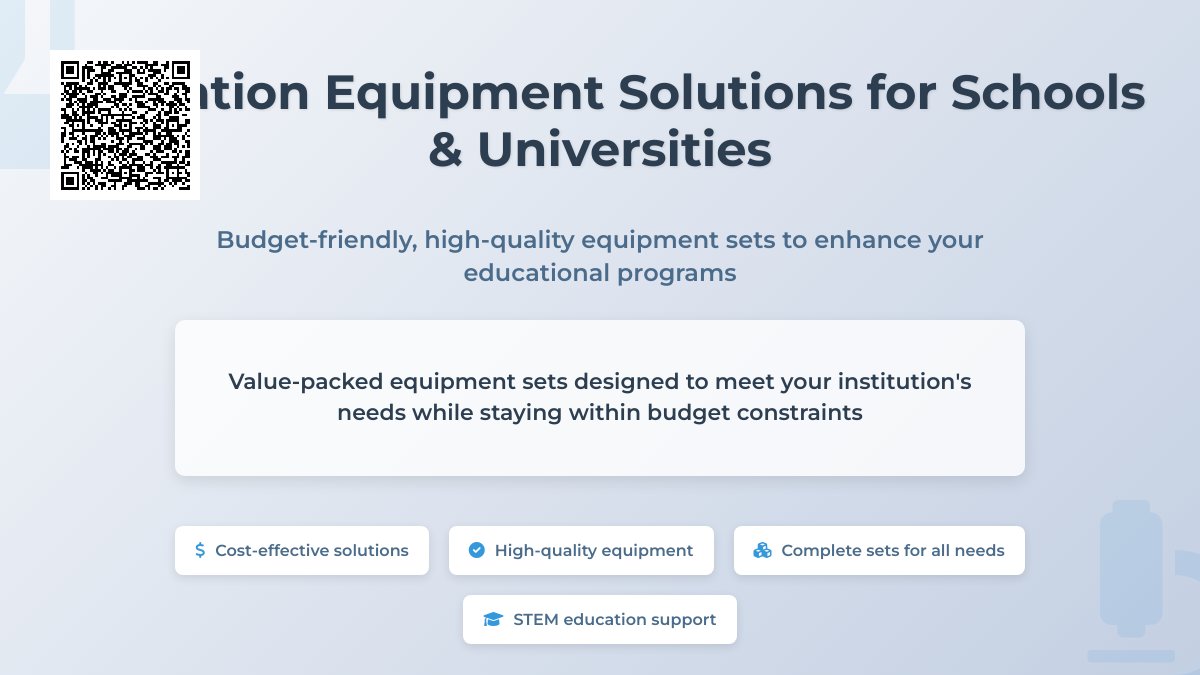
Schools & Universities: Seeking Budget-Friendly Options? Always Need Affordable Equipment – Solution: Value-Packed Sets
Keywords: school equipment, university equipment, affordable lab equipment, budget-friendly education, educational equipment sets, science lab equipment, classroom technology, educational technology, value-packed equipment sets, school budget, university budget, STEM education, science education, affordable science equipment, classroom supplies, lab supplies.
Introduction: The Constant Challenge of Educational Budgets
For schools and universities worldwide, the challenge of balancing high-quality education with limited budgets is a constant concern. From science labs to classrooms, libraries to art studios, institutions must provide reliable equipment to support learning and teaching. However, the cost of individual pieces of equipment—such as microscopes, projectors, computers, and labware—can quickly add up, making it difficult for schools to prioritize essential purchases. This article explores the budgetary challenges faced by educational institutions and introduces a practical solution: value-packed equipment sets. These sets offer a cost-effective and efficient way to meet equipment needs while staying within budget constraints.
The Budgetary Landscape in Education: A Growing Concern
Public education funding remains a contentious issue, with institutions often struggling to meet their needs due to limited resources. While the importance of education is universally recognized, the funds allocated frequently fall short of addressing the evolving demands of students and educators. This is particularly evident in higher education, where rising tuition costs and declining state and federal support create additional pressure. As a result, schools and universities are forced to make tough decisions, often delaying equipment upgrades or forgoing essential purchases.
Common Budgetary Pressures:
- Limited Funding Sources: Reliance on government grants, tuition fees, and private donations creates financial instability.
- Rising Operational Costs: Increases in utilities, maintenance, and personnel expenses reduce the budget available for equipment.
- Technological Advancements: The rapid pace of innovation means equipment becomes outdated quickly, requiring frequent upgrades.
- Curriculum Changes: New educational standards and teaching methods often necessitate updated resources and tools.
- Deferred Maintenance: Postponing equipment repairs and replacements can lead to higher long-term costs and compromised educational quality.
The Essential Equipment Needs of Schools and Universities
While the specific equipment requirements vary by institution, certain categories are universally essential:
- Science Labs: Microscopes, glassware, safety equipment, and lab instruments are critical for STEM education.
- Classrooms: Presentation systems, interactive whiteboards, and audiovisual equipment enhance teaching and learning experiences.
- Libraries: Computers, printers, and assistive technology support research and accessibility.
- Art Studios: Tools like easels, paints, and pottery wheels are essential for creative expression.
- Music Rooms: Instruments, amplifiers, and recording equipment are vital for musical education.
- Physical Education: Sports equipment and fitness gear promote physical well-being.
Purchasing these items individually can be time-consuming and costly, making value-packed sets an attractive alternative.
Introducing Value-Packed Equipment Sets: A Smart Solution
Value-packed equipment sets provide a streamlined and cost-effective way to meet educational needs. These curated collections of related equipment are designed to address specific requirements, offering a complete solution in one package. By purchasing sets, institutions can avoid the hassle of sourcing individual items from multiple vendors.
Types of Value-Packed Equipment Sets Available:
- Basic Science Lab Starter Sets: Includes microscopes, slides, glassware, and safety gear for introductory biology and chemistry courses.
- Advanced Chemistry Lab Sets: Features specialized equipment like hot plates, pH meters, and glassware for advanced experiments.
- Physics Experiment Kits: Demonstrates fundamental principles of mechanics, electricity, and magnetism.
- Classroom Technology Bundles: Combines projectors, interactive whiteboards, and audio systems for enhanced presentations.
- Early Childhood Education Sets: Provides age-appropriate tools for preschool and kindergarten classrooms.
- Specialized Sets: Tailored for disciplines like engineering, robotics, or digital media.
The Benefits of Choosing Value-Packed Sets
- Cost Savings: Purchasing sets is almost always more affordable than buying individual items, thanks to bulk pricing and streamlined logistics.
- Simplified Procurement: Reduces the time and effort required for sourcing, ordering, and managing multiple vendors.
- Compatibility Assurance: Ensures all components within the set work together seamlessly.
- Complete Solutions: Provides everything needed for a specific curriculum or activity, minimizing the risk of missing essential items.
- Time Efficiency: Saves staff time that would otherwise be spent on procurement and inventory management.
- Standardization: Promotes consistency across classrooms or labs, simplifying training and maintenance.
- Warranty & Support: Many vendors offer comprehensive warranties and technical support for entire sets.
- Scalability: Sets can be customized to meet the needs of different class sizes or programs.
Case Studies: Real-World Examples of Success
- Small Rural High School: A rural high school revitalized its science program by purchasing a basic science lab starter set, enabling hands-on learning experiences for students.
- Community College: Upgraded classroom technology with a bundle, improving student engagement and supporting blended learning environments.
- University Engineering Department: Acquired a robotics experiment kit, providing students with practical experience in robotics design and programming.
Choosing the Right Value-Packed Set: Key Considerations
- Curriculum Alignment: Ensure the set aligns with your educational goals and standards.
- Equipment Quality: Research the vendor's reputation and the durability of the equipment included.
- Set Contents: Review the list of items to confirm they meet your specific needs.
- Warranty and Support: Check the terms of the warranty and the availability of technical assistance.
- Vendor Reputation: Select a vendor with a proven track record of quality and customer service.
- Budget: Establish a clear budget and compare pricing from different vendors.
- Scalability: Consider whether the set can be expanded or adapted as your needs evolve.
Conclusion: Investing in the Future of Education
Schools and universities face ongoing budgetary challenges, but they don't have to compromise on the quality of education they provide. Value-packed equipment sets offer a smart, cost-effective solution for acquiring the essential tools needed to support student learning and achieve educational goals. By embracing this approach, institutions can maximize their resources, streamline procurement processes, and create engaging and effective learning environments for all students. Investing in value-packed equipment sets is an investment in the future of education.
SEO Notes & Further Refinement:
- Keyword Density: Analyze the article using a keyword density tool to ensure a healthy balance (aim for around 1-2% for primary keywords).
- Internal Linking: Add internal links to other relevant pages on your website (e.g., product pages for specific equipment sets, blog posts about STEM education).
- External Linking: Link to authoritative sources (e.g., education research organizations, government websites) to enhance credibility.
- Headings & Subheadings: Use clear and descriptive headings and subheadings to improve readability and SEO. Use H1, H2, H3 tags appropriately.
- Image Optimization: Include relevant images throughout the article and optimize them with descriptive alt text containing keywords.
- Meta Description: Write a compelling meta description (around 150-160 characters) that summarizes the article and includes relevant keywords. This is what appears in search results.
- URL Structure: Use a keyword-rich URL for the article (e.g., /schools-universities-affordable-equipment-sets).
- Readability: Use short paragraphs, bullet points, and clear language to improve readability.
- Schema Markup: Consider adding schema markup to your page to provide search engines with more context about the content.
- Promotion: Share the article on social media and other relevant platforms.
- Long-Tail Keywords: Consider adding sections that address more specific long-tail keywords (e.g., "best science lab equipment sets for high school biology," "affordable classroom projectors for large lecture halls").
- Geographic Targeting: If you serve a specific geographic area, incorporate location-based keywords (e.g., "school equipment suppliers in [City, State]").
To further tailor this article, please provide:
- Specific types of equipment sets you primarily offer.
- Your target audience (e.g., K-12 schools, universities, community colleges).
- Any specific case studies or testimonials you'd like to incorporate.


