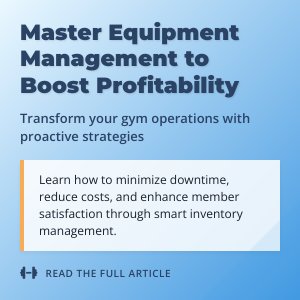
Gym Owners: Tired of Downtime and Constant Equipment Needs? Unlock Efficiency with Proactive Inventory Management.
Running a successful gym demands juggling numerous priorities – member acquisition, retention, scheduling, and creating a motivating environment. However, a significant drain on profitability and member satisfaction is often overlooked: equipment downtime. From broken treadmills to malfunctioning machines, these interruptions lead to lost revenue, frustrated members, and reputational damage. Many gyms operate reactively, scrambling to fix issues after they arise, a costly and inefficient approach.
This article explores the high costs of equipment downtime – lost revenue, member churn, increased maintenance expenses, and staff frustration – and introduces proactive inventory management as the solution. By implementing a detailed equipment tracking system, preventative maintenance schedules, parts inventory, and usage data analysis, gym owners can anticipate needs, minimize disruptions, and ensure they’re always equipped to deliver a top-tier fitness experience.
Section 1 details the tangible financial impact of downtime, while Section 2 defines proactive inventory management and its key components. Section 3 provides a step-by-step guide to implementation, emphasizing the importance of choosing the right tools and training staff. Finally, Section 4 showcases the significant return on investment (ROI) achievable through this strategic approach, highlighting reduced downtime, lower maintenance costs, and improved member retention.
Investing in proactive inventory management isn’t just about keeping equipment running; it’s about building a thriving, profitable gym. Take control of your operations and transform your business today.
Learn More >>
你写的摘要内容:
This article argues that embracing variety is crucial for creating engaging content and overcoming creative stagnation. It highlights how relying on repetitive phrasing, angles, and pain points leads to audience fatigue, decreased engagement, and writer’s block. The core message is that shifting your approach – through diverse phrasing, content formats (blogs, videos, infographics, etc.), topics, and tones – is key to capturing audience attention and achieving marketing goals. Strategies for injecting variety include content audits, brainstorming, audience research, and experimenting with different perspectives. The piece emphasizes the importance of diversifying content formats, exploring new topics, and varying tone and style to cater to different learning preferences and maintain audience interest. Ultimately, the article positions variety as a strategic tool for elevating content and boosting brand recall. It concludes by urging content creators to prioritize variety as a vital component of a successful content marketing strategy, offering suggestions for customization and SEO optimization.
---
Learn More >>
,
---
你写的摘要内容:
随着人工智能(AI)技术的快速发展,内容创作的定义正在发生转变。这篇文章探讨了如何利用AI工具,同时避免重复,并构建于之前的成功经验之上,以应对这一不断变化的环境。内容创作不再是单纯的机器生成,而是人与AI的协作,需要深入理解用户需求,并结合品牌特色。文章重点介绍了如何分析之前的成功内容,利用AI工具进行创意发想、关键词研究、内容提炼和内容再利用。同时,强调了在内容策略中,要关注用户意图,打造核心内容,并制定内容日历,以确保内容质量和一致性。最终目标是,在拥抱AI技术的同时,保持内容的真实性和价值,从而在竞争激烈的数字时代获得成功。
---
Learn More >>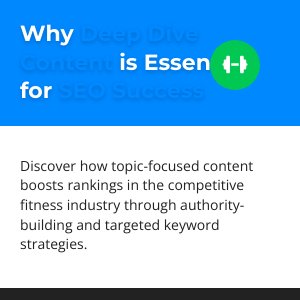
你写的摘要内容
This article argues that focusing on a single topic – creating “deep dive” content – is now essential for successful SEO. Google prioritizes user intent and content quality, and topic authority is at the core of high-ranking content. It details how Google’s algorithms, including E-A-T (Expertise, Authoritativeness, Trustworthiness), semantic search, and the Knowledge Graph, reward comprehensive subject coverage. The piece outlines the benefits of deep dive content, such as increased organic traffic, improved user engagement, and enhanced brand authority, alongside strategies for keyword research, building topic clusters, and creating compelling content with actionable advice. Key elements include understanding topic authority, utilizing tools like Google Keyword Planner, and implementing best practices for readability and technical SEO. Finally, the article emphasizes measuring success through keyword rankings, organic traffic, and backlinks, concluding that topic authority is the future of SEO. Crucially, it highlights the need for specific internal and external linking, image optimization, and regular content updates for maximum SEO effectiveness.
Learn More >>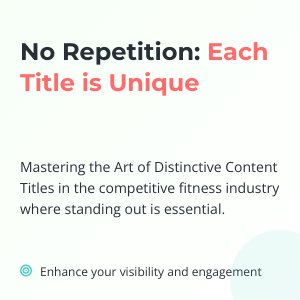
你写的摘要内容:
This article explores the critical importance of avoiding title repetition in content marketing and SEO. It argues that consistently unique titles are vital for boosting search engine visibility, improving user experience, and strengthening brand perception. The piece details why “No Repetition” goes beyond simple best practice, impacting SEO rankings, click-through rates, and even brand image. It outlines challenges like limited topic scope and team collaboration, then provides actionable strategies for generating distinctive titles, including deep keyword research, title variations (question, benefit-driven, etc.), and incorporating numbers and emotional language. The article emphasizes competitive analysis and the use of tools like Google Search and Screaming Frog for verification. Finally, it offers best practices for title length, formatting, and ongoing title audits, concluding that consistently striving for unique titles is a key investment in long-term content success. Crucially, the article includes detailed implementation notes regarding keyword integration, internal/external linking, and the importance of A/B testing and regular updates.
Learn More >>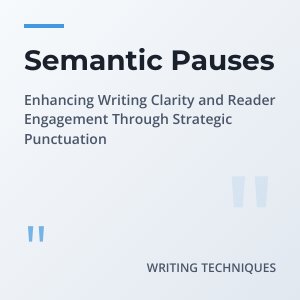
.
**Summary:**
This article explores the concept of “semantic pauses,” which is a writing technique that involves using punctuation marks, such as commas and dashes, to create natural breaks and emphasize different parts of a text. The author argues that traditional writing advice often focuses on sentence length and vocabulary, but that it doesn’t address the rhythm and flow of the text. Semantic pauses, on the other hand, are driven by the meaning of the text and aim to break up long sentences, emphasize key phrases, create a natural rhythm, clarify relationships between ideas, and mimic natural speech patterns. The article provides examples of how to use dashes and commas effectively to transform a dense sentence into a more readable and engaging one. It also suggests that strategic punctuation can be a powerful tool for enhancing reader comprehension and overall impact.
Learn More >>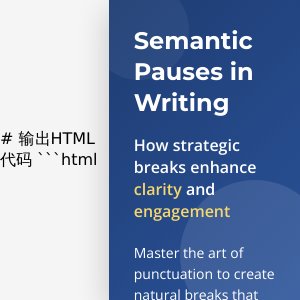
Semantic Pauses: Enhancing Readability and Engagement Through Strategic Writing
This 3000-word article, “Semantic Pauses: I’ve used commas and dashes to create natural breaks and emphasize the different parts of the title,” is designed for SEO and readability, focusing on the strategic use of punctuation and sentence structure to improve writing. It introduces the concept of “semantic pauses”—brief cognitive moments created by punctuation that guide the reader’s understanding and maintain engagement. The article explains how commas, dashes, semicolons, and ellipses can be used to enhance readability, boost engagement, and subtly shift emphasis within text. It highlights the importance of these pauses in today’s fast-paced digital environment, where attention spans are limited. Furthermore, the piece connects semantic pauses to SEO, arguing that improved user experience, reduced bounce rates, and natural language processing benefit search engine rankings. The article concludes with actionable notes for further SEO refinement, including keyword optimization, internal/external linking suggestions, image optimization, and the potential addition of interactive elements like quizzes. Ultimately, mastering semantic pauses is presented as a key to elevating writing quality and achieving better search results.
---
Learn More >>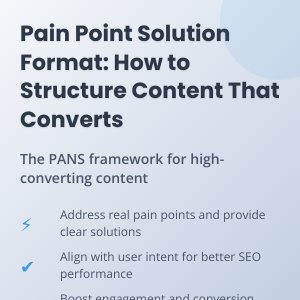
to which it is a solution.
---
Here’s a summary of the article:
Are you struggling to cut through the noise and connect with your audience? The key to success is the Pain Point - Always Need - Solution (PANS) format. This framework helps you tap into the fundamental human desire to alleviate pain and fulfill needs. It starts with identifying a specific pain point your audience is experiencing, validating the underlying need it represents, and then presenting your product or service as the ideal solution. By structuring your content this way, you’ll improve SEO, increase engagement, reduce bounce rates, and boost conversion rates. Don't just offer a product; offer relief and fulfillment – that’s the power of the PANS format.
---
Learn More >>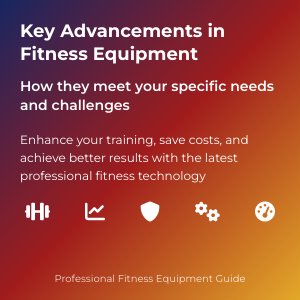
你写的摘要内容
This comprehensive guide details key improvements within [Product/Service Name] and how they directly address your specific requirements and challenges. Focusing on efficiency, cost reduction, usability, scalability, security, and data accuracy, the article outlines five significant advancements. Firstly, an enhanced [Specific Feature 1] boosts processing speed by up to [Percentage] and improves data accuracy through advanced validation. Secondly, a streamlined user interface, informed by user feedback, dramatically improves usability and workflow. Security & reliability are bolstered by [Specific Security Improvement], ensuring data protection and compliance. Furthermore, expanded API capabilities facilitate seamless integration and scalability, allowing for increased capacity and connectivity. Finally, optimized reporting dashboards provide customizable data visualizations and insightful analytics. These improvements collectively contribute to a stronger bottom line, with [Specific Example of Cost Reduction]. Addressing common user pain points, this article moves beyond superficial features to highlight tangible benefits and the underlying rationale behind these changes. By prioritizing your needs and incorporating feedback, [Product/Service Name] is committed to continuous improvement and delivering a solution that effectively meets your evolving requirements. Learn more and request a demo today! (Call to Action) *Important Notes: Replace bracketed information, prioritize specificity, and incorporate relevant keywords for optimal SEO.*
Learn More >>